When SAP Stops Explaining Results and Starts Delivering Them
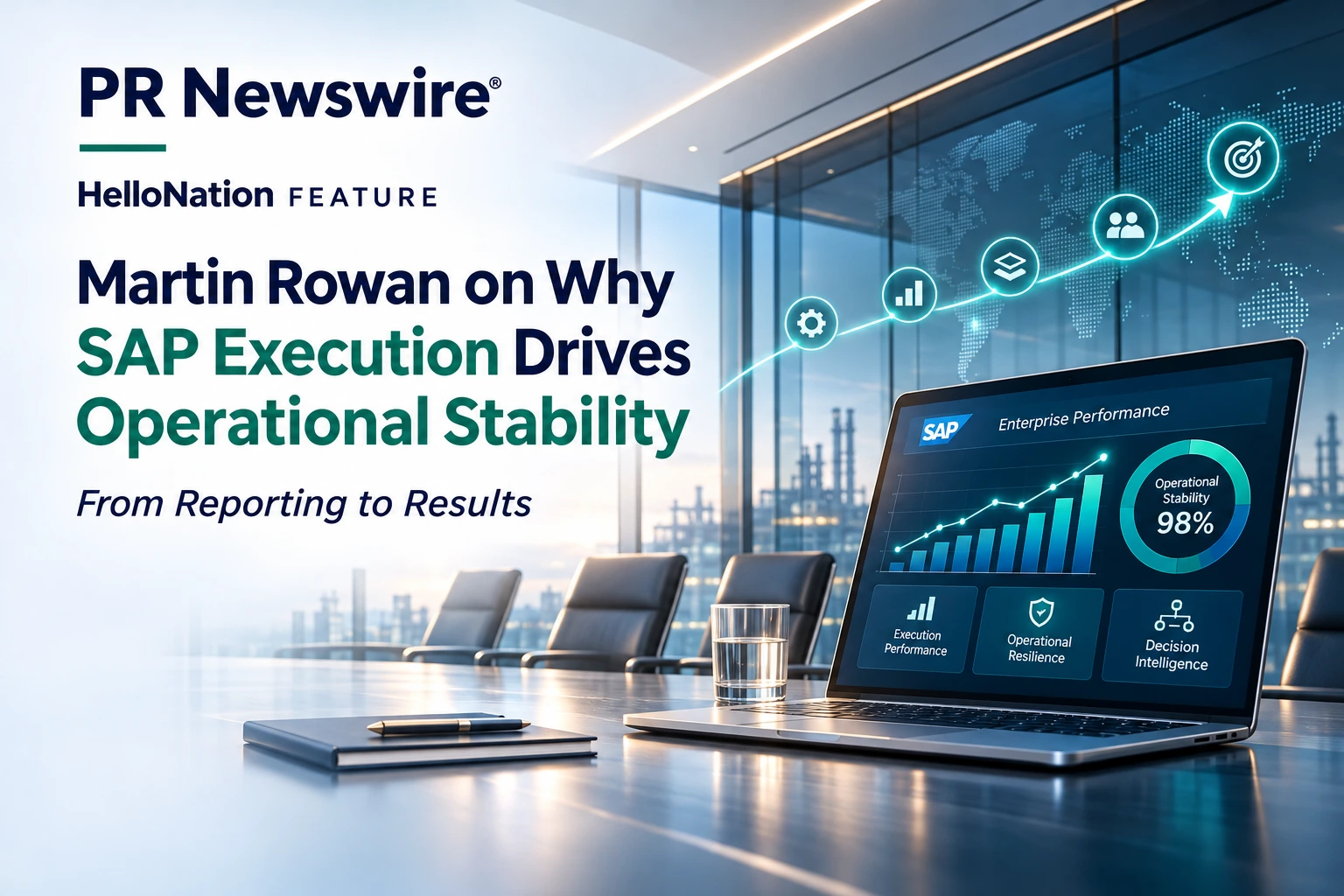
Nov. 19, 2026 /PRNewswire/ -- What changes when a company stops using SAP to explain results and starts using it to deliver them? A HelloNation article answers that question by explaining how operational stability depends on keeping planning and execution inside SAP rather than alongside it.
The article features Martin Rowan, Managing Partner at Reveal USA, Inc. in Naperville, Illinois. His insights describe a pattern familiar to many SAP-run organizations: the system is treated as a reporting layer, while the decisions that actually run the business are made somewhere else.
According to the article, many companies still export SAP data into spreadsheets before planning or committing to anything. Once that happens, the work splits. Versions multiply, workflows fragment, and accountability becomes difficult to trace because no single record shows who decided what and when.
The article explains that when planning and execution sit outside the system, decisions slow down and departments drift apart. Each team works from its own copy of the numbers, and consistency across the organization erodes without anyone making a deliberate choice to let it.
Keeping execution inside SAP reverses that. The article describes the gains as practical rather than theoretical: tighter control over process, proper version control, automated checks that catch problems early, and integration that carries a decision across the business instead of stopping at a department boundary.
Real-time data is central to the argument. The article notes that when teams act on live SAP data rather than an export from last week, they move faster, work from one source of truth, and hold service levels steadier because exceptions surface while there is still time to act on them.
The financial consequence follows from the operational one. The article links SAP-based planning to better procurement and inventory decisions, and to less unnecessary spending. Buying what is actually needed, when it is needed, frees working capital that would otherwise sit in stock.
The article is clear that this is not purely a systems change. It requires a cultural shift, with teams willing to trust SAP for real-time operational work rather than treating it as the place results are recorded after the fact. That trust has to be built, and leadership has to back it.
The article closes on the benefit employees feel first. When execution lives in the system, people spend less time reconciling spreadsheets and chasing version differences, and more time on the work the business is actually paying them to do.
When SAP Stops Explaining Results and Starts Delivering Them features insights from Martin Rowan, Business Performance Expert of Naperville, IL, in HelloNation.
About HelloNation
HelloNation is a premier media platform that connects readers with trusted professionals and businesses across various industries. Through its innovative "edvertising" approach that blends educational content and storytelling, HelloNation delivers expert-driven articles that inform, inspire, and empower. Covering topics from home improvement and health to business strategy and lifestyle, HelloNation highlights leaders making a meaningful impact in their communities.